 blog
blog
Choosing Durable Materials for Outdoor Deck Construction
Table of Contents
- Why Material Selection Matters for Deck Longevity
- Pressure-Treated Wood: Affordability and Rot Resistance
- Composite vs Pressure Treated Wood Lifespan: What the Numbers Show
- Fire Resistant Decking Materials and Safety Ratings
- Best Low Maintenance Deck Materials for Your Climate
- Natural Hardwood Options: Ipe and Cumaru for Premium Decks
- Making Your Final Material Choice
- Frequently Asked Questions
Last Updated: September 18, 2026
Why Material Selection Matters for Deck Longevity
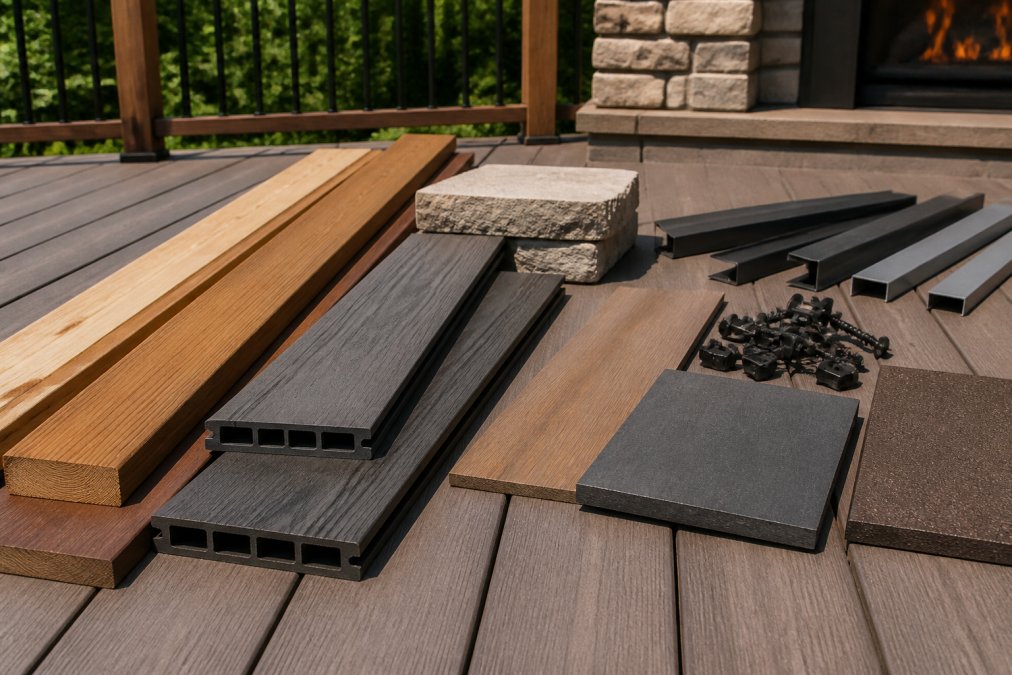
Choosing durable materials for outdoor deck construction determines your deck's lifespan, maintenance needs, and weather resistance for decades.
The wrong choice requires replacement in five years; the right one lasts 25+ years. We help homeowners evaluate durability, maintenance, fire resistance ratings, and long-term value.
This guide examines pressure-treated lumber, composite, natural hardwoods, and fire-resistant alternatives so you can choose the right material for your climate and budget.
Pressure-Treated Wood: Affordability and Rot Resistance
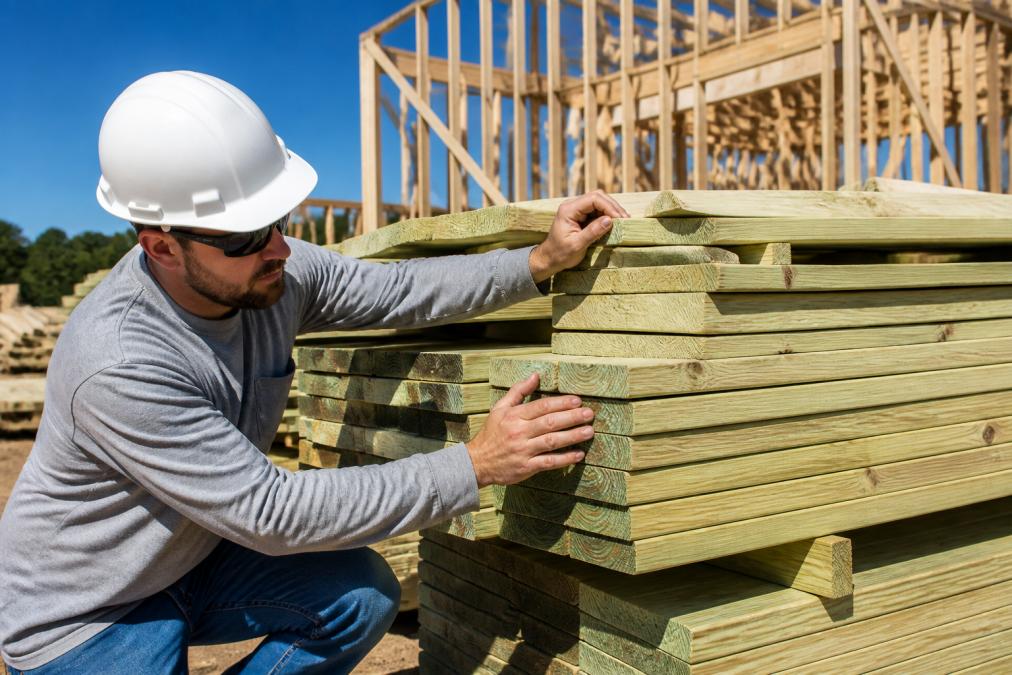
Pressure-treated wood is the most affordable decking option, chemically treated under pressure to resist rot and termite damage.
The treatment forces preservatives deep into wood fibers, protecting against moisture and fungal decay. Modern formulations use copper-based preservatives instead of older arsenic-based treatments.
Pressure-treated wood lasts 15-20 years with proper maintenance, requiring sealing every 2-3 years. It weathers to gray unless regularly stained or sealed.
Pros:
- Lowest upfront cost of any decking material
- Rot and termite resistance built in
- Widely available and easy to source
- Works well for new construction or repairs
Cons:
- Requires regular sealing and maintenance
- Prone to warping and cupping over time
- Surface splinters without proper care
- Can leach small amounts of preservatives during the first few months
Composite vs Pressure Treated Wood Lifespan: What the Numbers Show
Composite decking lasts 25-30 years with minimal maintenance; pressure-treated wood lasts 15-20 years and requires ongoing sealing. Understanding total cost of ownership and installation requirements reveals why the choice isn't straightforward.
Lifespan and Material Composition
Composite materials combine wood fibers and plastic polymers, resisting moisture absorption and preventing rot and mold even in wet climates. Pressure-treated wood relies on chemical preservatives that degrade over time as the wood weathers.
10-Year Maintenance Cost Comparison
Upfront cost tells only part of the story. Over a 10-year period, maintenance expenses significantly impact total investment:
Pressure-Treated Wood (10-year cycle):
- Sealing/staining every 2-3 years
- Spot repairs for warping, cupping, or splintering
- Fastener replacement or tightening
- Estimated 10-year maintenance: pricing depends on quantity, dates, and delivery
Composite Decking (10-year cycle):
- Annual cleaning with mild soap and water
- Occasional mold or mildew treatment
- No sealing, staining, or structural repairs required
- Estimated 10-year maintenance: pricing depends on quantity, dates, and delivery
Structural Compatibility and Installation Requirements
Material choice affects structural design. Pressure-treated wood requires standard joist spacing (16 inches on center) and standard fasteners. Composite is lighter but some products require closer joist spacing (12 inches on center) and stainless steel or coated fasteners to prevent corrosion staining.
Composite boards typically install on existing pressure-treated frames without structural modifications.
Fire Resistance and Safety Ratings
Fire resistance differs significantly. Pressure-treated wood with fire-retardant additives achieves Class B or C ratings; high-quality composite with fire-resistant cores can achieve Class A ratings, the highest standard. In wildfire-prone areas or where codes mandate fire resistance, composite with Class A certification may be the only compliant choice.
Appearance and Color Retention
Composite boards don't splinter, warp, or cup and maintain color longer with UV inhibitors. Pressure-treated wood weathers to gray within 1-2 years unless sealed regularly.
Pressure-treated wood makes sense only if you commit to regular sealing every 2-3 years. Composite is better if you prioritize low maintenance, consistent appearance, or fire resistance ratings required by code.
Fire Resistant Decking Materials and Safety Ratings
Fire resistance matters in wildfire-prone areas or where building codes require it. Materials are rated based on flame and heat exposure performance.
Class A is the highest fire rating standard, indicating lowest flame spread. Pressure-treated wood with fire retardants resists fire better than untreated wood but carries more risk than engineered fire-resistant materials.
Composite decking with fire-resistant additives can achieve Class A ratings. Fiber-cement boards offer excellent fire resistance but are less common for decking.
Check fire rating labels and ask contractors about product classifications. Building codes in high-risk areas may require minimum fire ratings. Class A means minimal flame spread and smoke.
Fire-resistant material options:
- Pressure-treated wood with fire retardant additives (Class B to Class C)
- High-quality composite with fire-resistant cores (Class A available)
- Fiber-cement boards (Class A)
- Tropical hardwoods like Ipe (naturally fire-resistant, Class A)
Best Low Maintenance Deck Materials for Your Climate
The best low-maintenance materials depend on your regional climate. Understanding how materials perform under your local weather patterns ensures minimal intervention over the deck's lifetime.
Humid and Wet Climates (Southeast, Pacific Northwest, Northeast)
In humid, rainy regions, composite or tropical hardwoods outperform pressure-treated wood. Constant moisture reduces pressure-treated lifespan to 10-12 years. Composite sheds water and requires only annual cleaning and occasional mold treatment.
Tropical hardwoods like Ipe naturally resist moisture decay and require only periodic cleaning, though they demand pre-drilling and stainless steel fasteners in high-humidity environments.
Arid and High-UV Climates (Southwest, Mountain West)
In dry climates with intense sun, thermal expansion is the primary durability concern. Pressure-treated wood performs adequately if sealed every 2-3 years, and lower humidity extends lifespan closer to 15-20 years.
Composite handles thermal cycling better due to lower thermal expansion. UV exposure causes fading in standard composites over 5-7 years unless they include UV inhibitors. High-quality desert-engineered composites require only annual cleaning.
Coastal and Salt-Spray Environments
In coastal areas with salt spray, composite or tropical hardwoods are essential. Salt accelerates fastener corrosion and degrades wood fibers. Pressure-treated wood fails within 8-10 years because copper-based preservatives cannot fully protect against salt.
Composite with marine-grade fastening systems performs well in coastal zones. Tropical hardwoods like Ipe require stainless steel fasteners throughout to prevent corrosion staining.
Temperate Climates with Moderate Moisture
In temperate climates with moderate rainfall, pressure-treated wood is viable if sealed every 2-3 years. Composite performs well and eliminates sealing, making it lower-maintenance despite higher upfront cost.
Matching Material to Your Specific Region
Research your local climate data: rainfall, humidity, temperature extremes, and UV index. In the Upper Midwest, pressure-treated wood with sealing works adequately. In the Gulf Coast, composite or tropical hardwoods are practical despite higher cost. Wildfire-prone areas may require Class A fire resistance ratings, favoring composite with fire-resistant cores or tropical hardwoods like Ipe.
Your contractor should understand how materials perform in your specific microclimate, including wind, shade, and proximity to water or salt sources. This expertise prevents costly failures and aligns maintenance schedules with realistic expectations.
Natural Hardwood Options: Ipe and Cumaru for Premium Decks
Natural hardwoods like Ipe and Cumaru offer premium durability and appearance, significantly denser and harder than pressure-treated lumber or composite.
Ipe (Brazilian walnut) is one of the hardest woods, naturally resisting rot, termites, and fire. It lasts 25-30+ years with minimal maintenance but requires pre-drilling every fastener hole.
Cumaru (tonka bean wood) offers similar durability to Ipe with better workability and natural fire and rot resistance. Both develop a gray patina unless sealed.
Downsides include higher cost and environmental concerns. Tropical hardwoods require sustainable sourcing verification to prevent deforestation.
Natural hardwood characteristics:
- Exceptional durability (25-30+ years)
- Natural fire and rot resistance
- Beautiful appearance with rich grain
- Requires pre-drilling for fasteners
- Higher cost and environmental impact
- Minimal maintenance needed
Making Your Final Material Choice
Balance durability, maintenance, fire resistance ratings, climate suitability, and budget. Start with your climate: wet regions favor composite or hardwoods unless you'll seal pressure-treated wood every two years. Dry climates make pressure-treated wood viable. Consider fire resistance if in a wildfire zone or if codes require it.
Calculate long-term costs: pressure-treated wood costs less upfront but requires regular maintenance; composite costs more initially but saves money over 20 years; natural hardwoods cost most but last longest with minimal care.
Consider your maintenance tolerance. For set-it-and-forget-it, choose composite or tropical hardwoods. For regular upkeep and lowest initial cost, choose pressure-treated wood.
We help evaluate these options for your situation. We understand how materials perform in your climate and ensure proper installation, which is as important as material selection.
The right material choice protects your investment and ensures your deck remains safe and beautiful for decades.
Building a deck that lasts requires choosing durable materials for outdoor deck construction matched to your climate and maintenance preferences. Wolff Exteriors offers expert guidance on material selection and professional installation for decks, fences, and outdoor living spaces. Our team ensures proper fastener systems, structural integrity, and weather resistance so your deck performs for years to come. Request a Free Quote and let us help you build an outdoor space that stands the test of time.
Frequently Asked Questions
What is the most durable material for a deck?
Durability depends on your climate and maintenance commitment. Composite decking typically lasts 25-30 years with minimal upkeep. Natural hardwoods like Ipe can last 20-25 years but require regular sealing. Pressure-treated wood lasts 15-20 years with moderate maintenance. Fire-resistant ratings also influence durability, materials rated for higher fire resistance often have enhanced structural integrity and weather protection.
How does climate affect the longevity of outdoor deck materials?
Moisture, UV exposure, and temperature fluctuations directly impact deck lifespan. In humid climates, pressure-treated wood and composites resist mold and mildew better than untreated hardwood. UV stability varies significantly, composite materials resist fading better than natural wood. Freeze-thaw cycles in colder regions can cause warping and cracking in less dense materials. Choosing materials with proven performance in your specific climate extends life expectancy by years.
What maintenance is required for high-durability decking materials?
Pressure-treated wood needs sealing every 2-3 years and regular cleaning to prevent mold. Composite decking requires occasional cleaning but no staining or sealing. Natural hardwoods like Ipe need annual sealing to maintain rot resistance and color. All materials benefit from removing debris and ensuring proper water drainage through the substructure. Lower-maintenance options like composites can reduce long-term labor.
Are there specific building codes regarding deck material fire safety?
Building codes vary by jurisdiction but generally require decks to meet fire-resistance standards set by the International Building Code. Some materials carry fire ratings that exceed minimum requirements, providing extra protection. Pressure-treated lumber has inherent fire resistance due to chemical treatment. Composite materials vary in fire ratings depending on composition. Check local code requirements before material selection.