 comparison
Roof Repair vs Full Roof Replacement: How to Decide
Table of Contents
- Roof Repair vs Full Roof Replacement: Start With the Facts
- Signs of Roof Damage That Point to Repair
- When Damage Means a Full Roof Replacement
- Average Cost of Roof Replacement vs. Repair
- Roof Lifespan by Material: Age as a Decision Factor
- Insurance, Resale Value, and the Financial Angle
- How to Get a Straight Answer From Your Contractor
- Conclusion
- Frequently Asked Questions
Last Updated: September 7, 2026
Roof Repair vs Full Roof Replacement: Start With the Facts
The roof repair vs full roof replacement decision is one of the most consequential financial calls a homeowner will make, yet most people approach it backward by focusing on price alone. We have guided hundreds of property owners through this exact choice, and the answer rarely comes down to cost in isolation. A roof is a long-term investment in your home's structural integrity, energy efficiency, and resale value, so the decision demands a clear-eyed look at age, damage extent, and your actual plans for the property.
Before any estimate, understand this core principle: repair addresses isolated problems in an otherwise sound roof system, while replacement becomes necessary when damage threatens the roof decking, underlayment, or the structure's ability to shed water. The wrong call in either direction is expensive. Repairing a roof that needs replacement leaves you paying twice, while replacing a roof that only needed targeted fixes wastes thousands of dollars you could have invested elsewhere. Below, we break down exactly how to tell which situation you are in, what the financial trade-offs look like, and how to get a straight answer from a contractor.
Signs of Roof Damage That Point to Repair
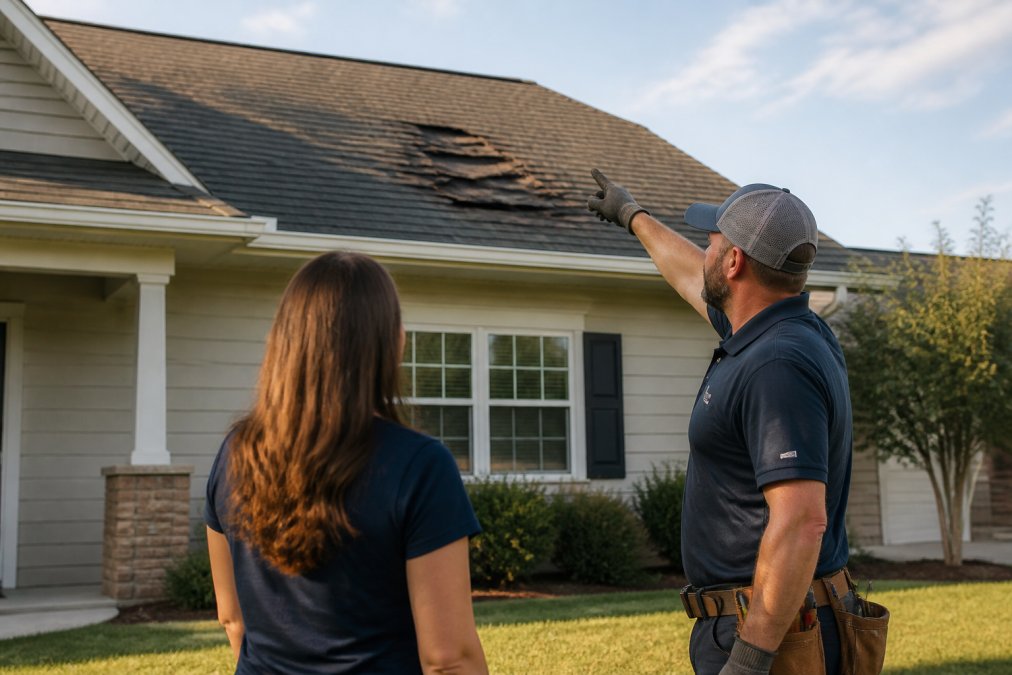
The most common mistake homeowners make is assuming any visible damage means the whole roof must go. In practice, a roof with isolated issues and plenty of service life remaining is often a strong candidate for repair. The key is distinguishing between cosmetic surface problems and failures that compromise the roof system's ability to keep water out.
Look for these indicators that typically point toward repair rather than replacement:
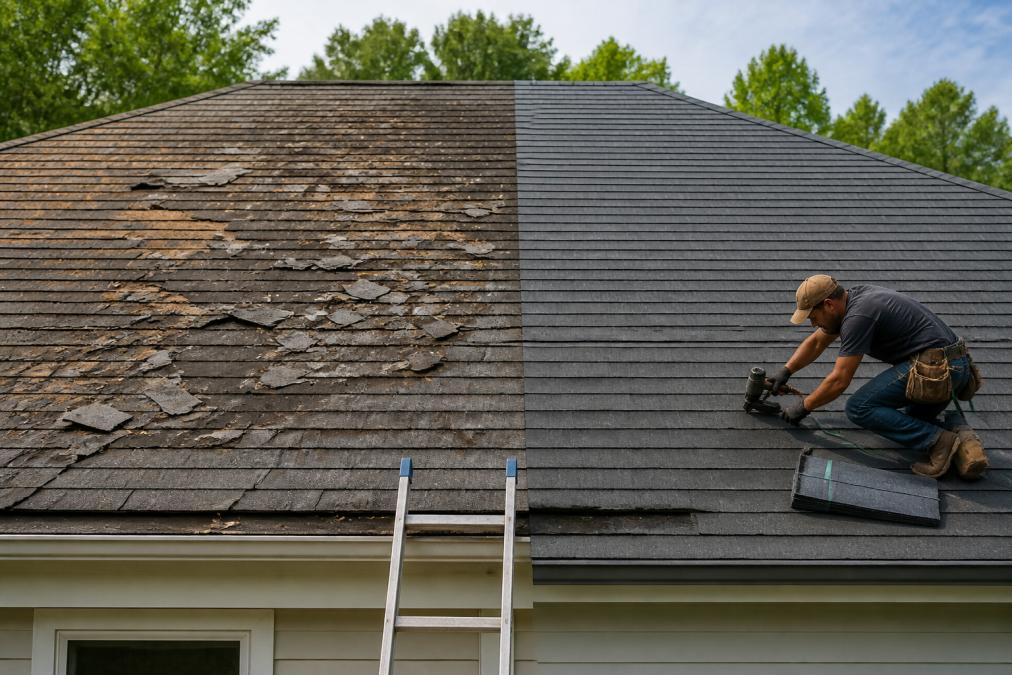
- Curling or cracked shingles confined to one section or slope, with the surrounding field of shingles still flat and intact
- Granule loss visible only in gutters or downspouts near a specific area, not uniformly across the entire roof
- Localized flashing damage around a chimney, vent pipe, or valley where the metal has pulled away or rusted through
- A small leak with a clear entry point, where the roof decking underneath remains dry and structurally sound
- Minor storm damage like a few missing shingles or a small dented area that does not extend into the underlayment
The critical test for repair is the condition of the roof decking and underlayment beneath the surface shingles. If a contractor can remove the damaged shingles and find dry, solid wood underneath, repair is almost always the right financial move. Water infiltration that has soaked the decking, caused dry rot, or damaged the structural framing changes the calculation entirely.
When Damage Means a Full Roof Replacement
A full roof replacement becomes the correct choice when the problems are systemic rather than isolated. The difference is not the size of the visible damage but whether the roof system itself has reached the end of its functional life or sustained damage that compromises its core structure.
Several conditions point decisively toward replacement:
- Widespread shingle failure where curling, cracking, or granule loss affects most of the roof surface, indicating the material is exhausted
- Damage across multiple slopes or roof sections, suggesting the entire system has aged out rather than suffered a localized event
- Compromised roof decking where water infiltration has caused dry rot or structural weakening in multiple areas
- Multiple active leaks in different parts of the roof, each requiring its own repair and signaling systemic failure
- A roof past its expected lifespan with any notable damage, since even successful repairs will only buy a few years before the next failure
The roof pitch matters here too. Steeper roofs shed water more effectively and often outlast their expected lifespan, while low-pitch roofs that allow water pooling will accelerate material degradation (spri.org). A contractor should assess both the visible damage and the roof's geometry when making a recommendation.
Average Cost of Roof Replacement vs. Repair
The cost gap between repair and replacement is substantial, but the true financial comparison is more nuanced than the sticker price. A repair costs a fraction of a full replacement, yet it only makes sense if the roof has enough remaining service life to justify the expense.
Several factors drive the cost difference:
- Scope of work: A repair covers a single section, while a replacement involves a full tear-off of existing materials, new underlayment, flashing replacement, and installation of an entirely new roof system
- Materials: Replacement requires purchasing all new roofing materials across the entire surface, while repair uses only enough material to fix the damaged section
- Labor intensity: A tear-off and re-roofing project takes significantly more time and manpower than a targeted repair
- Roof complexity: Roof pitch, the number of valleys, penetrations like chimneys and skylights, and accessibility all affect pricing for both options
The roof repair vs full roof replacement decision becomes clearer when you run a simple cost-benefit analysis. If your roof is less than halfway through its expected lifespan and the damage is isolated, repair is the clear winner. If the roof is past its expected lifespan, even a modest repair cost is largely wasted because the rest of the system will fail soon regardless.
Roof Lifespan by Material: Age as a Decision Factor
Roof age is the single most reliable predictor of whether repair or replacement is the right move. Different roofing materials have very different expected lifespans, and knowing where your roof sits on that timeline frames every other consideration.
| Material | Typical Lifespan | Repair Outlook | Replacement Trigger |
|---|---|---|---|
| Asphalt shingles | 20-30 years | Good if under 15 years old | Widespread damage past 20 years (asphaltroofing.org) |
| Architectural shingles | 25-30 years | Good if under 20 years old | Widespread damage past 25 years |
| Metal roofing | 40-70 years | Excellent for isolated issues | Structural damage or severe corrosion |
| Wood shakes | 20-25 years | Good if under 15 years old | Dry rot or widespread splitting |
| Tile or slate | 50+ years | Excellent for isolated issues | Broken tiles with decking damage |
The decision framework becomes straightforward when you combine age with damage extent. A 10-year-old asphalt shingle roof with a few damaged shingles after a storm is a textbook repair case. A 25-year-old asphalt shingle roof with the same visible damage is almost always a replacement candidate, because the surrounding shingles are nearing the end of their service life and will fail soon after the repair.
Insurance, Resale Value, and the Financial Angle
The financial picture extends beyond the immediate out-of-pocket cost. Insurance coverage, home equity, and resale value all shape whether repair or replacement is the smarter long-term investment.
Storm damage changes the calculus significantly. If a recent weather event caused the damage, your homeowners insurance policy may cover the repair or replacement, subject to your deductible and policy terms. The claims process typically requires documentation of the damage, a contractor estimate, and an adjuster inspection before approval. Understanding your coverage before making any decisions is critical, because it directly affects which option is financially viable.
The roof repair vs full roof replacement decision also affects your home's value. A new roof is one of the few home improvements that delivers near-complete return on investment at resale, because buyers know they will not face a major expense in the first decade of ownership (remodeling.hw.net). An aging roof with visible damage, by contrast, becomes a negotiating point that can reduce your sale price by more than the cost of replacement.
Your maintenance history matters here as well. Homeowners who document regular inspections and preventative maintenance have a stronger case for repair, because the track record shows the roof has been cared for. That documentation also helps if you file an insurance claim, since insurers look more favorably on roofs that received routine attention.
How to Get a Straight Answer From Your Contractor
Finding a contractor who will give you an honest assessment rather than an upsell is the hardest part of this process. The reality is that some providers push replacement because it is a larger job, while others offer cheap repairs that do not address the underlying issue.
Ask these questions before committing to any recommendation:
- What is the age of my roof, and what is its expected remaining lifespan? A contractor who cannot answer this is not doing a proper evaluation.
- Can you show me the specific damage that justifies your recommendation? You should see the curling shingles, the compromised flashing, or the decking damage yourself.
- What is the condition of my roof decking and underlayment? This is the difference between a repair and a replacement, and the contractor should be able to document it.
- Will my insurance cover this? A reputable contractor will help you navigate the claims process rather than avoiding the question.
- What does your warranty cover, and for how long? Warranty coverage on both materials and workmanship tells you how confident the contractor is in their work.
A contractor who does both repairs and replacements is more likely to give you an honest recommendation, because they are not steering you toward work they cannot perform. Look for a provider with licensed, insured crews and a track record of completing jobs in your area. We hold the necessary Nevada licenses and maintain constant communication with customers until the job is complete, so you always know where your project stands.
Conclusion
The roof repair vs full roof replacement decision comes down to three questions: how old is the roof, how extensive is the damage, and what are your long-term plans for the home? Answer those honestly, and the right choice becomes clear. Repair serves a young roof with isolated damage. Replacement protects your investment when the roof system has reached the end of its service life or sustained damage that compromises its core structure.
Frequently Asked Questions
Is it better to repair or replace a roof?
It depends on the age of the roof, the extent of the damage, and the roofing material. If the damage is isolated and the roof is under 15 years old, a repair is often sufficient. If the roof is nearing the end of its expected lifespan by material, or if damage affects the structural integrity across a large area, a full roof replacement is usually the better long-term investment. A professional inspection can give you a clear answer.
What are the signs that a roof needs to be replaced rather than repaired?
Key signs include widespread curling or missing shingles, significant granule loss in gutters, daylight visible through the roof decking, or sagging areas that indicate structural issues. If water infiltration has damaged the underlayment or if flashing is failing in multiple locations, repairs may only mask a deeper problem. A roof over 20 years old with these issues typically needs replacement rather than repeated repairs.
How long does a roof repair typically last versus a new roof?
A quality repair on an asphalt shingle roof can last 5 to 10 years if the underlying roof system is sound. A full roof replacement with asphalt shingles provides 20 to 30 years of service when properly installed. The decision often comes down to whether you plan to stay in the home long enough to justify the higher upfront cost of a replacement.
Making this call on your own is stressful, especially after storm damage when you need answers quickly. The Wolff Exteriors team provides honest assessments backed by durable, high-quality materials and fast, reliable service, so you get a recommendation based on what your roof actually needs, not what is easiest to sell. Request a free quote and let us help you protect your home with a decision you can feel confident about.