 blog
blog
Emergency Roof Repair Sparks Nevada: 2026 Guide
Table of Contents
- Emergency Roof Repair in Sparks Nevada: What to Expect
- Storm and Wind Damage Repair: First 24 Hours
- Leak Detection, Water Damage Mitigation, and Roof Inspection
- Roof Repair vs Full Roof Replacement: How to Decide
- Class A Fire-Rated Roofing Materials for Northern Nevada
- Insurance Claim Documentation Guide for Roof Storm Damage
- Residential and Commercial Roofing: Emergency Dispatch Costs and Service Areas
- Conclusion
- Frequently Asked Questions
Last Updated: September 12, 2026
Emergency Roof Repair in Sparks Nevada: What to Expect
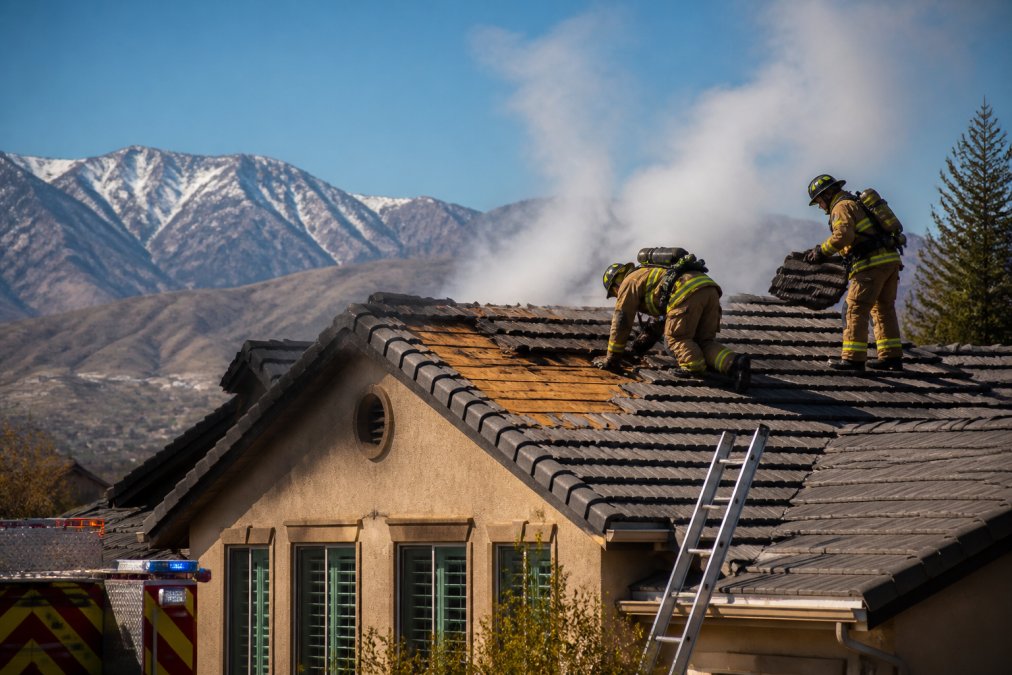
When a storm tears through the Truckee Meadows, the first question homeowners ask is how fast someone can get there. Emergency roof repair in Sparks Nevada means stabilizing active damage, stopping water intrusion, and securing the roof before the next system arrives. At Wolff Exteriors, speed depends on triage: a roof with water pouring into a bedroom gets a crew faster than a lifted ridge cap with no active leak.
A roofing emergency is any condition that threatens structural integrity or the interior of the home right now: active leaks, missing shingles after high wind, fallen tree limbs, or punctured flashing. Everything else is urgent but schedulable.
What Counts as an Emergency vs. an Urgent Repair
The distinction determines how quickly a crew is dispatched and what a service call costs. True emergencies involve active water intrusion, exposed decking, or structural risk. Urgent items, like a cracked pipe boot or a few missing shingles on a dry day, can wait for a scheduled appointment.
- Emergency: active leak, water staining spreading on the ceiling, missing sheathing, tree impact
- Urgent: localized flashing damage, a handful of displaced shingles, granule loss
- Routine: worn sealant, minor fascia wear, aging but intact shingles
How Fast a Local Roofing Crew Can Realistically Get There
Response time depends on weather, post-storm call volume, and whether your roof is safe to access. During a major wind event, every crew in the valley is triaging. A reputable contractor will tell you where you sit in the queue rather than promise an hour that never arrives. Ask two questions: what is your dispatch window, and what does the diagnostic visit cover?
Storm and Wind Damage Repair: First 24 Hours
The first 24 hours after storm damage decide how much of your interior survives. Wind lifts shingles at edges and ridges first, while hail bruises the mat and knocks granules loose. Fallen trees are obvious, but quiet damage like a hairline flashing separation causes the most water damage later.
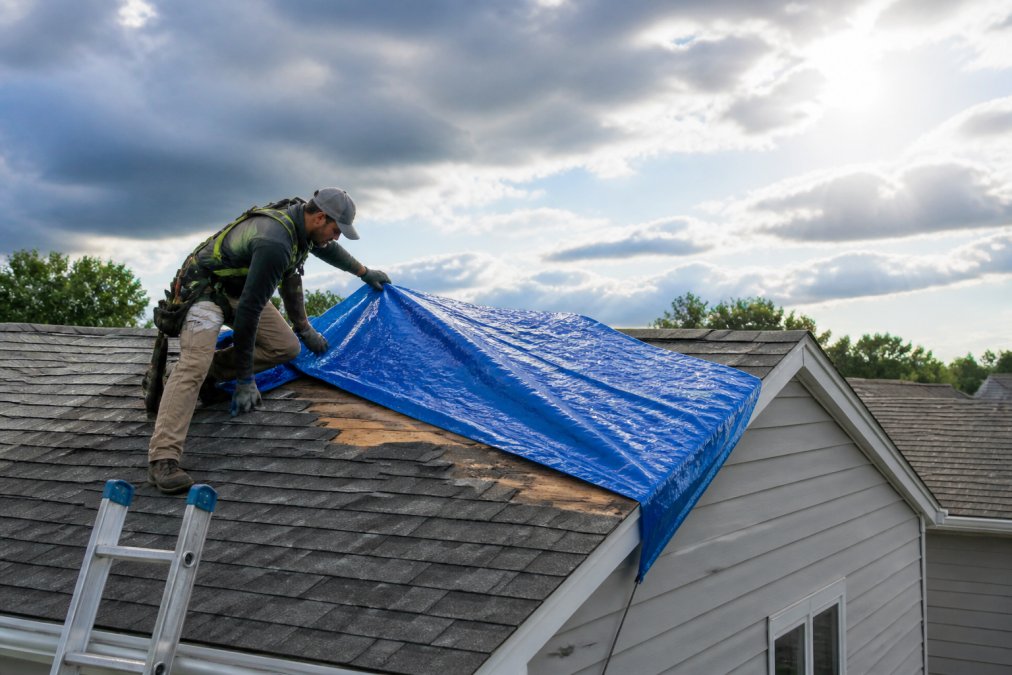
DIY Temporary Tarping Instructions
Tarping is a stopgap, not a repair. Do it only if the roof is dry, the pitch is low, and you can work safely from the ground or a stable ladder. Never walk a wet or steep roof.
- Measure the damaged area and add three feet of overhang on every side
- Lay the tarp so it overlaps the ridge and runs downhill
- Fasten with cap nails or 2x4 lumber along the edges, never through the middle of the field
- Seal penetrations with roofing cement
- Photograph the finished tarp and keep your receipts
If the pitch is steep, the roof is wet, or the damage is near a valley, stop and call a professional. The fall risk is not worth it.
Leak Detection, Water Damage Mitigation, and Roof Inspection
Leak detection starts with a full roof inspection, not a guess from the ground. Moisture rarely shows up directly below the breach; water travels along decking and rafters before it stains a ceiling. A proper inspection traces the entry point, checks flashing repair points, examines valleys and penetrations, and assesses attic-side staining.
Water damage mitigation runs in parallel: dry the interior, remove soaked insulation, and stop the source. Left alone, moisture feeds mold and rots decking, turning a repair into a replacement.
Roof Repair vs Full Roof Replacement: How to Decide
The decision comes down to age, extent, and repeat history. If your roof is under 15 years old, the damage is isolated, and this is the first leak, repair is almost always right. If the roof is past 20 years, has multiple leaks, or shows widespread granule loss and curling, replacement usually costs less over the next decade than patching a failing system piece by piece.
| Situation | Recommended Path | Why |
|---|---|---|
| Isolated leak, roof under 15 years | Targeted repair | Damage is contained |
| Storm damage, one slope affected | Partial replacement | Matches existing materials |
| 20+ years, multiple leaks | Full replacement | Patching a failing system wastes money |
| Widespread granule loss, curling | Full replacement | Shingles are at end of life |
A licensed and insured roofing contractor will give you the honest answer, even when it means a smaller job. Ask for the inspection findings in writing.
Class A Fire-Rated Roofing Materials for Northern Nevada
Class A fire-rated roofing materials are the highest fire-resistance classification under ASTM E108, and they matter more in Northern Nevada than most homeowners realize (astm.org). Wildfire risk along the urban edge, combined with intense summer sun and freeze-thaw winters, punishes roofing materials. Class A ratings are earned by asphalt shingles with a treated fiberglass mat, metal roofing, clay and concrete tile, and some synthetic composites.
For a Class A rating to hold, the entire roofing assembly has to comply, not just the surface. Underlayment, flashing, and edge details all count. In practice, this means a Class A shingle installed over non-rated underlayment does not deliver the fire resistance the label promises.
Insurance Claim Documentation Guide for Roof Storm Damage
Most storm damage claims are won or lost on documentation, not the damage itself. Homeowners often document the wrong things at the wrong time because they do not know how a claim moves through the system. Here is the sequence that matters.
How a Storm Damage Claim Actually Moves
- First notice of loss. Call your insurer and open the claim. Get the claim number and adjuster's name in writing the same day.
- Emergency mitigation. Tarping, board-up, and water extraction happen before the adjuster sees the roof. Keep every receipt, most policies reimburse reasonable mitigation costs separately from the permanent repair.
- Adjuster inspection. The adjuster documents the loss and issues a scope of work. Be present, and walk the roof with the adjuster if it is safe.
- Settlement offer. This is where ACV and RCV diverge, and where most homeowners leave money on the table.
- Supplement process. If your contractor finds damage the adjuster missed, common on steep-slope or multi-layer roofs, the contractor files a supplement with photo evidence. This is normal, not adversarial.
ACV vs. RCV: The Distinction That Changes Your Payout
- Actual Cash Value (ACV): replacement cost minus depreciation. On a 15-year-old roof, depreciation can cut the initial check substantially.
- Replacement Cost Value (RCV): the full cost to replace, paid in two stages, an initial ACV payment, then recoverable depreciation once the work is complete and invoiced.
If your policy is RCV, you must complete the repair and submit the final invoice to recover depreciation. Homeowners who take the first check and stop there forfeit that second payment. Read your policy's loss settlement section before agreeing to anything.
Documentation Checklist
- Photograph the damage from the ground, the attic, and the interior before any tarp goes on
- Note the date, time, and weather conditions, hail size and wind speed if you have them
- Save tarping receipts and any emergency dispatch invoice
- Request a written inspection report with photo evidence from your contractor
- Keep a running log of every call, email, and claim number with your insurer
- Get a written roofing quote before agreeing to any settlement
- Confirm in writing whether your policy is ACV or RCV
According to the Nevada Division of Insurance consumer guides, policyholders should review their policy's storm damage provisions and document losses promptly. The Insurance Information Institute's claim guidance recommends filing as soon as damage is discovered to avoid disputes over timing.
Residential and Commercial Roofing: Emergency Dispatch Costs and Service Areas
Pricing for emergency work depends on scope, materials, and time of day, so no reputable contractor quotes a flat number over the phone. But "it depends" is not an answer, and fear of a surprise bill keeps many homeowners from calling. Here is how emergency roofing costs are structured and what drives them up or down.
What Drives the Cost of an Emergency Call
- Time of day. After-hours, weekend, and holiday dispatch carries a premium over standard business hours, the single biggest swing factor.
- Access and pitch. A steep-slope roof, multi-story home, or roof with no safe ladder access takes longer and requires more safety equipment.
- Scope of stabilization. A single tarp over one slope differs from boarding up a collapsed section or extracting standing water from an attic.
- Materials on hand. Matching existing shingles, flashing, or underlayment may require a supply run, adding time and cost.
- Mitigation vs. permanent repair. Mitigation stops the bleeding; the permanent repair is quoted separately after inspection.
How the Invoice Is Typically Structured
- Diagnostic or inspection fee: covers the on-site assessment and written findings. Some contractors credit it toward the repair if you proceed.
- Emergency dispatch fee: applies to after-hours and weekend stabilization. Ask upfront whether it is flat or hourly.
- Materials and labor: quoted after inspection, in writing, before work begins.
- Tarping or board-up: usually billed separately from the permanent repair, and often reimbursable through your insurance mitigation coverage.
Homeowners are often surprised not by the repair cost but by dispatch and diagnostic fees they never asked about. Ask three questions before you commit: Is there a dispatch fee, is it flat or hourly, and does the diagnostic fee credit toward the repair? A contractor who answers clearly is one you can work with.
Residential vs. Commercial Emergency Response
For residential roofing, the priority is stopping water intrusion into living space and protecting the interior. For commercial roofing, a leak over a tenant space can trigger business interruption, so property managers should prioritize structural integrity and moisture intrusion, then document everything for the commercial policy. Commercial roofs, TPO, EPDM, modified bitumen, often need different emergency materials than residential asphalt shingle, so confirm your contractor carries both.
Fire Resistance and Ratings Matter Even in an Emergency
When a storm forces a repair, it is also the moment to check what you are putting back on the roof. Class A fire-rated roofing materials are the highest fire-resistance classification under ASTM E108, and they matter more in Northern Nevada than most homeowners realize. Wildfire risk along the urban edge, intense summer sun, and freeze-thaw winters punish roofing materials. Class A ratings are earned by asphalt shingles with a treated fiberglass mat, metal roofing, clay and concrete tile, and some synthetic composites.
For a Class A rating to hold, the entire roofing assembly must comply, not just the surface. Underlayment, flashing, and edge details all count. A Class A shingle over non-rated underlayment does not deliver the fire resistance the label promises. If your emergency repair touches the underlayment or flashing, ask your contractor to confirm the replacement matches the Class A rating of the surface material.
Service Areas
Wolff Exteriors serves Sparks, Reno, and surrounding Northern Nevada communities with residential and commercial roofing. A free estimate and written scope are standard. If a contractor will not put the scope in writing, walk away.
Conclusion
Storm damage does not wait for a convenient appointment, and neither should your response. Wolff Exteriors provides residential and commercial roofing with durable, high-quality materials, Class A fire-rated options, and constant communication from first call to final walkthrough. We are licensed and insured, and we quote the work in writing before we start. Request a free quote from Wolff Exteriors and get your roof secured before the next system rolls in.
Frequently Asked Questions
How urgent is roof repair when a leak is detected?
A detected leak is urgent, not optional. Water follows the path of least resistance and can travel along rafters before it shows up as a ceiling stain, so the visible wet spot is rarely where the roof is actually failing. Mold can begin forming within 24 to 48 hours of moisture intrusion, and soaked decking loses structural integrity fast. Call a licensed and insured roofing contractor the same day, cover the area below with buckets and plastic, and avoid walking on a saturated roof yourself.
How do I decide between roof repair vs full roof replacement after storm damage?
The decision usually comes down to three things: age, extent, and pattern of damage. A roof under 15 years old with isolated wind damage, a few lifted shingles, or one failed flashing repair is typically a strong repair candidate. Replacement makes more sense when damage covers roughly a third or more of the roof, when granules are gone across large sections, or when the roof is already near the end of its service life. A licensed roofing professional should inspect and document findings before you commit either way.
Do local roofing contractors offer Class A fire-rated material options?
Yes. Class A is the highest fire-resistance rating under ASTM E108, the standard used to test roof coverings against flame spread and burning brand exposure. Asphalt shingles, metal, clay tile, and some synthetic composites can all carry a Class A rating. If you live near wildland areas in Northern Nevada, ask for the fire rating in writing along with the manufacturer's product data sheet. Combining Class A materials with proper flashing repair and code compliance gives you the strongest protection.
How can I verify a roofing contractor's license and insurance before hiring?
Ask for the license number, then verify it directly with the Nevada State Contractors Board. Request a certificate of insurance showing both general liability and workers' compensation coverage, and call the insurer to confirm the policy is active. A legitimate contractor will provide these without hesitation. Wolff Exteriors, for example, holds NV License #0094416 and #0095570. Also ask for a written scope of work, a start date, and a payment schedule that does not require a large upfront deposit.