 listicle
9 Signs Your Siding Needs Immediate Repair
Table of Contents
- Why Delaying Siding Repair Costs You More
- 1. Cracking, Warping, and Buckling Panels
- 2. Rot, Soft Spots, and Hidden Structural Damage
- 3. Rising Energy Bills and Insulation Loss
- 4. Peeling Paint, Blistering, and Interior Wallpaper Damage
- 5. Mold, Mildew, and Fungus Growth
- 6. Fading, Chalking, and Discoloration
- 7. Pest Intrusion and Insect Damage
- What Most Guides Miss: Material-Specific Warning Signs
- 8. Loose or Missing Panels
- 9. Hail Impact and Storm Damage
- DIY vs. Professional Inspection Checklist
- How to Spot Storm Damage on Siding
- Siding Fire Resistance Ratings Explained
- When to Call a Professional
- Frequently Asked Questions
Last Updated: September 13, 2026
Why Delaying Siding Repair Costs You More
Small siding defects rarely stay small. A cracked panel or soft spot around a window frame lets water into the building envelope, and once moisture sits behind the cladding, damage spreads to sheathing, framing, and insulation (hud.gov). This guide from Wolff Exteriors covers nine warning signs that mean you should call a contractor now.
Ignoring those signs carries a second cost: hidden structural impact. By the time a soft spot is visible from the ground, the framing behind it may already be compromised. Catching the signs your siding needs immediate repair early is almost always cheaper than rebuilding a wall section later.
1. Cracking, Warping, and Buckling Panels
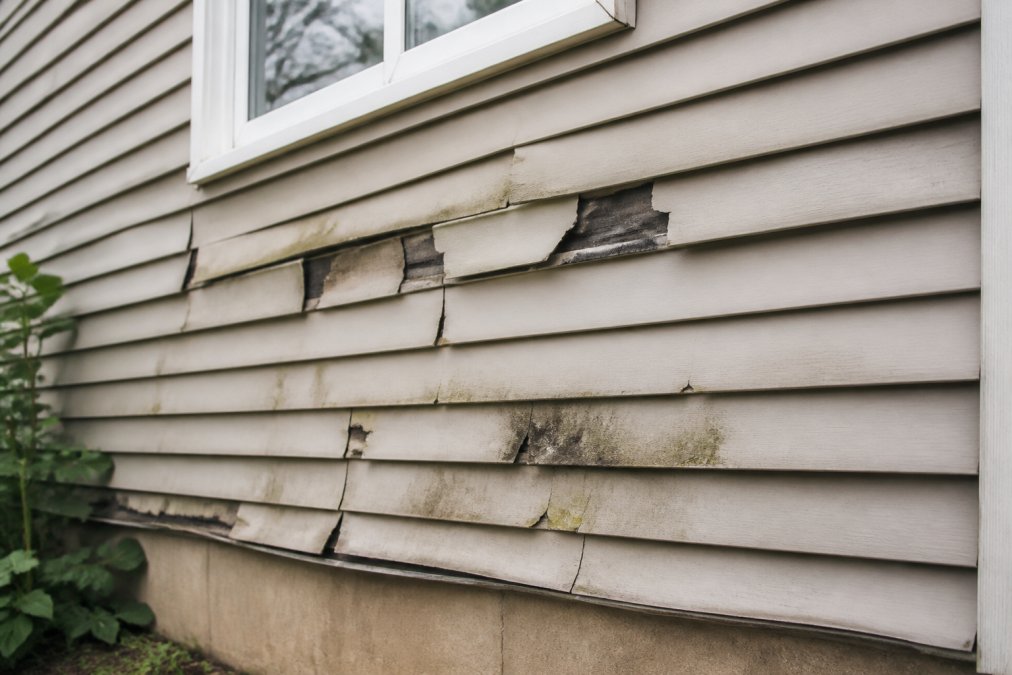
Cracking, warping, and buckling are the most visible signs your siding needs immediate repair, and they usually point to trapped moisture or thermal movement. Buckling outward often means water has swollen the sheathing underneath.
Look for:
- Hairline cracks that widen after a freeze-thaw cycle
- Panels bowing away from the wall
- Wavy or rippled sections along a single wall
- Gaps opening at seams
Cracking alone can be cosmetic; buckling almost never is. If a panel pushes away from the house, the fasteners or sheathing behind it have likely failed, a structural warning, not a paint problem.
2. Rot, Soft Spots, and Hidden Structural Damage
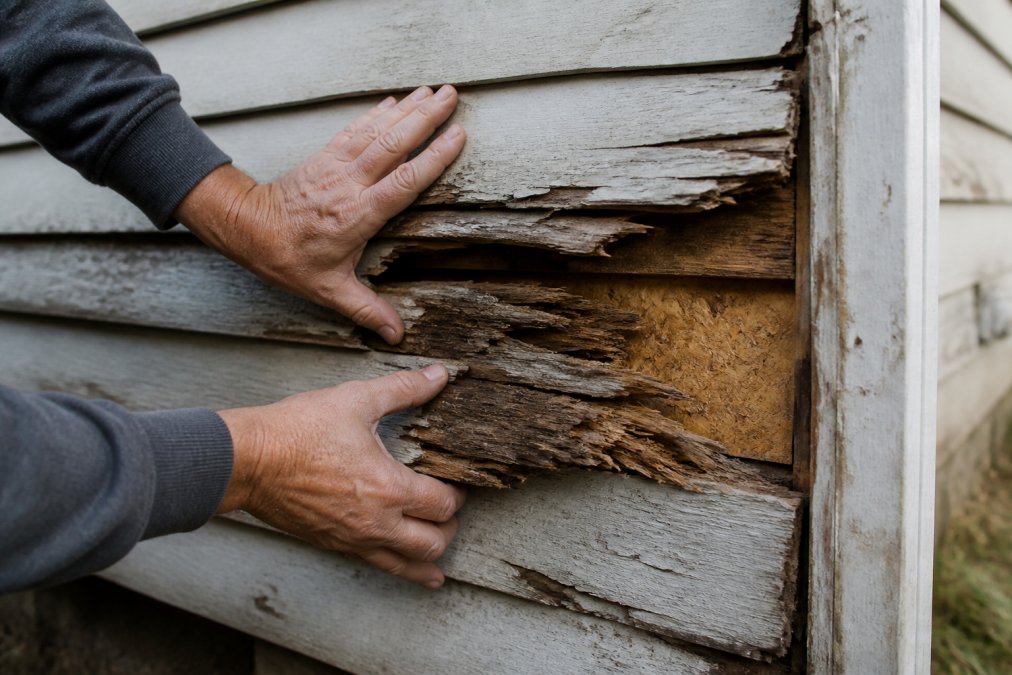
Dry rot is fungal decay that destroys the structural integrity of wood siding and framing while the surface still looks intact. Press a screwdriver into suspect wood; if it sinks easily, the wood is gone.
Rot spreads fastest at the bottom of walls, under windows, and anywhere caulking failure let water in. Homeowners underestimate it because the exterior looks fine while the sheathing behind it crumbles. Painting over soft trim fixes nothing.
3. Rising Energy Bills and Insulation Loss
A jump in heating and cooling costs is one of the quieter signs your siding needs immediate repair. Gaps, cracks, and separated panels let air move through the wall, defeating your insulation.
Watch for:
- Rooms that never feel comfortable regardless of thermostat settings
- Higher bills with no change in usage
- Drafts near outlets and light switches on exterior walls
- An HVAC system that runs longer to hit the same temperature
Thermal bridging makes it worse: when siding and framing conduct heat directly through the wall, insulation efficiency drops even if the material is intact (energy.gov). Repairing cladding and sealing gaps restores the thermal barrier and reduces HVAC load.
4. Peeling Paint, Blistering, and Interior Wallpaper Damage
Paint that peels or blisters within a year or two is a moisture signal, not a prep problem. Water trapped behind the siding pushes paint off from the inside out.
The interior tells the same story. Wallpaper that bubbles, curls at the seams, or stains near the ceiling usually means water is traveling through the wall cavity. Until the exterior moisture source is fixed, the damage returns every season.
5. Mold, Mildew, and Fungus Growth
Mold and mildew on siding, trim, or the shaded north side points to persistent dampness. A little green film after a wet spring is normal; dark, spreading patches that return after cleaning are not.
Mildew growth thrives where water sits: under eaves, behind shrubs, and in panel seams. Musty odors inside often trace back to the same exterior leak. If mold returns after cleaning, the moisture source is still active, a repair issue, not a cleaning issue.
6. Fading, Chalking, and Discoloration
Fading and chalking, a powdery residue that rubs off on your hand, are the slow signs your siding needs immediate repair. Chalking means the surface is breaking down under UV exposure; once the protective layer is gone, the material underneath absorbs water.
Patchy discoloration is the bigger concern. Uneven fading usually means one section is getting wetter than the rest, and on painted surfaces that patch is often where paint fails first.
7. Pest Intrusion and Insect Damage
Gaps, rot, and loose panels are open doors for pests. Carpenter ants, termites, and rodents all exploit the same moisture-damaged wood that siding problems create (extension.psu.edu).
Signs of pest infestation to check for:
- Small holes or sawdust-like frass near the foundation
- Chewed or hollowed wood at the base of the wall
- Droppings or nesting material in the wall cavity
- Mud tubes on exterior surfaces
Pest damage and moisture damage feed each other. Fixing the siding closes the entry point; treating pests without fixing the exterior just invites them back.
What Most Guides Miss: Material-Specific Warning Signs
Generic advice treats every wall the same, but vinyl, wood, fiber cement, and metal fail in completely different ways. Match the symptom to your actual cladding below.
Vinyl Siding
Vinyl moves more than any other cladding. It expands and contracts with temperature, so it's designed to hang loosely on its fasteners rather than sit tight against the wall.
- Buckling or waviness in a straight line usually means panels were nailed tight instead of hung in the slotted nail hem, so they had nowhere to expand.
- Cracks that appear in cold weather point to impact brittleness; vinyl loses flexibility below freezing and can shatter rather than flex.
- A rippled or 'oil-canning' look often traces to a backing wall that is uneven or to trapped moisture behind the panel.
- Fading that is uneven across a wall usually means one elevation faces the sun and the other does not, which is normal, not a defect.
Vinyl rarely rots, so a soft spot under vinyl almost always means the sheathing or trim behind it is wet, not the panel itself.
Wood Siding
Wood is the only common cladding that is itself a food source for fungus and insects, so it fails faster than anything else once moisture gets in.
- Soft, spongy wood that a screwdriver sinks into is active decay, not surface weathering.
- Paint that blisters in sheets rather than peeling in flakes signals water pushing from behind.
- Frass, mud tubes, or hollow-sounding boards point to carpenter ants or termites feeding on wet wood.
- Cupping or checking along the grain is normal aging, but boards that stay wet after rain are not.
Wood siding is also the material most likely to need full replacement rather than spot repair once rot reaches the sheathing.
Fiber Cement
Fiber cement is dimensionally stable and doesn't rot, which is why its failure modes are easy to miss. The panel can look perfect while the wall behind it is soaked.
- Chipping or crumbling at cut edges means the factory-sealed edge was cut in the field and never re-sealed, letting water wick into the board.
- Hairline cracks at butt joints usually mean the joint was not caulked or was caulked with a product that could not handle movement.
- Efflorescence, a white chalky bloom, is a sign that water is moving through the material and leaving mineral salts behind.
- Paint failure concentrated at seams points to moisture at the joint, not a paint defect.
Because fiber cement holds its shape, the visible surface often looks fine long after the sheathing behind it has started to fail.
Metal and Aluminum Siding
Metal siding doesn't rot or feed pests, but it hides moisture better than any other material.
- Dents and dimples are cosmetic on their own, but a dent that breaks the factory finish exposes bare metal to corrosion.
- Chalking, a powdery residue that rubs off, means the finish is breaking down and the panel is no longer shedding water the way it should.
- Rust streaks or pitting at the base of a wall point to standing water or a failed flashing detail above.
- Loose panels that rattle in wind mean fasteners have backed out, which lets wind-driven rain reach the sheathing directly.
Fire Resistance and Ratings by Material
Fire performance is a separate axis from durability and varies sharply by material. Fiber cement and metal siding are noncombustible and carry the strongest fire ratings available for cladding. Wood siding and foam-backed insulated vinyl carry lower ratings because the core or panel itself can contribute fuel. When you repair a section, ask your contractor how the replacement material's fire resistance rating compares to the rest of the wall, a mismatched rating can create a weak point in an otherwise protected exterior, especially on a wall facing a property line, deck, or neighboring structure.
8. Loose or Missing Panels
A single loose panel is a small problem; several loose or missing panels is a structural one. Once panels detach, water reaches the sheathing and vapor barrier directly, and the wall loses both weather protection and insulation value.
Check for panels that move when pressed, missing fasteners, and seams opened wider than a quarter inch. On upper floors, missing panels expose framing to wind-driven rain, accelerating everything else on this list.
9. Hail Impact and Storm Damage
Hail leaves marks that are easy to miss from the ground. Look for dents, dimples, and spiderweb cracks, especially on the side of the house that faced the storm.
Hail impact often damages the surface without breaking it, so the panel looks intact while its moisture resistance is gone. Homeowners discover this months later, once rot has set in. After any significant storm, a professional inspection is worth the time even if nothing looks wrong.
DIY vs. Professional Inspection Checklist
Most articles list warning signs and stop there. What they never explain is how to inspect your own siding without prying off a panel, cracking brittle vinyl, or voiding a warranty. The method below works from the ground up and stops the moment you find something that needs a professional.
Before You Start
- Pick the right day. Inspect after a dry stretch, not right after rain; wet siding hides the difference between a stain and active moisture.
- Work from the ground with binoculars first. You see more from a safe distance than from a ladder, and you avoid the leading cause of homeowner injury.
- Never probe above the first floor. Soft spots and rot are structural findings, and a ladder plus a screwdriver is how homeowners get hurt.
- Photograph everything before you touch it. Photos establish a baseline and matter for any insurance claim.
Step 1: The Ground-Level Walk
Walk the full perimeter with the sun at your back so shadows reveal texture changes. Look for panels out of plane with their neighbors, opened seams, and staining running downward from a window, roofline, or flashing. Note which elevation faces the prevailing weather; that wall shows problems first.
Step 2: The Touch Test
Press the flat of your hand, not a tool, against suspect panels and trim. Feel for three things:
- Movement, a panel that flexes or rattles has lost fasteners.
- Softness, a spongy feel means the material or the wood behind it is failing.
- Temperature difference, a section that feels noticeably cooler or damper than its neighbors is holding moisture.
Step 3: The Screwdriver Probe (Ground Level Only)
A screwdriver is the standard field tool for testing wood, but use it only on wood or trim you can reach from the ground. Push the tip in gently at a suspect spot: if it sinks easily, the wood is gone; if it meets resistance, the surface is intact. Don't pry or probe vinyl or fiber cement, which can crack and leave a new entry point.
Step 4: The Interior Cross-Check
Siding failure almost always shows up inside before it shows outside. Check the interior face of exterior walls for bubbling paint, curling wallpaper seams, musty odors in closets, and stains near the ceiling. An interior symptom paired with an exterior one is the strongest confirmation you'll get without opening a wall.
Step 5: The Storm Sweep
After any hail or high-wind event, redo the ground-level walk and check the windward elevation first. Hail damage often leaves the panel looking intact while breaking the surface that sheds water, so it shows up as rot months later rather than a visible crack.
When to Stop and Call a Professional
Stop the inspection and call a contractor immediately if you find any of the following:
- A soft spot that a screwdriver sinks into more than a quarter inch
- A panel that is buckling, bowing, or detaching from the wall
- Mold or mildew that returns after cleaning
- Pest activity, including frass, mud tubes, or hollow-sounding wood
- Any sign of moisture inside the wall cavity
Urgency at a Glance
| Sign | DIY Check | Urgency | Action |
|---|---|---|---|
| Hairline crack | Visual, one panel | Low | Monitor each season |
| Buckling panel | Press for movement | High | Call a professional |
| Soft spot | Screwdriver probe, ground level only | Critical | Call a professional |
| Peeling paint | Visual, repeat areas | Medium | Inspect for moisture |
| Musty interior odor | Check wall cavity | High | Call a professional |
| Loose panel | Press and wiggle | High | Call a professional |
| Pest activity | Look for frass, holes | Medium | Professional inspection |
| Hail marks | Flashlight sweep | Medium | Professional inspection |
How to Spot Storm Damage on Siding
Learning how to spot storm damage on siding comes down to three checks: dents and dimples from hail, cracks and gaps from wind, and moisture staining from driving rain. Storm damage is often invisible from the ground, so get close and look along the wall at a low angle.
Check the windward side first, then the seams and base of each wall. If you find damage, photograph it before any repair, that record matters for insurance claims.
Siding Fire Resistance Ratings Explained
Siding fire resistance ratings explained simply: materials are tested for how well they resist flame spread and how long they hold up under fire exposure. Fiber cement and metal siding typically carry the strongest ratings; some wood and foam-backed products carry lower ones.
If you live in an area with wildfire risk, this rating matters as much as appearance. When you repair or replace siding, ask your contractor to match the existing wall's fire rating so you don't create a weak point.
When to Call a Professional
Some signs are watch-and-wait; others need a contractor this week. Cracking, fading, and light chalking can be monitored. Buckling, soft spots, mold that returns, and pest damage should be inspected immediately, because each points to moisture already inside the wall.
If you're unsure, get an inspection. Wolff Exteriors handles siding repair and replacement alongside roofing, windows, gutters, and framing, so one team can assess the whole exterior instead of sending you to three contractors. We keep you updated at every stage until the job is complete.
Frequently Asked Questions
How can I tell if my siding is rotting underneath?
Press firmly on the siding. If it feels soft, spongy, or crumbles, rot is likely present. Other signs include bubbling paint, a musty smell, or visible dark streaks. Because rot often starts behind the panels, a professional inspection is the only way to confirm the full extent and prevent hidden structural damage.
Will homeowners insurance cover rotted siding?
It depends on the cause. Most policies cover sudden damage from storms, hail, or wind. Rot from long-term neglect or moisture is typically excluded. Review your policy and document the damage with photos. A professional contractor can provide a detailed report to support your claim.
What is the difference between siding repair and full replacement?
Repair addresses isolated issues like a few cracked panels or localized rot. Replacement is necessary when damage affects more than 30% of the siding, when the material is obsolete, or when widespread moisture has compromised the sheathing. A professional assessment will determine the most cost-effective path.
How does siding fire resistance impact home safety ratings?
Fire-resistant siding can slow the spread of flames, giving occupants more time to escape and reducing structural damage. Materials are rated Class A, B, or C, with Class A offering the highest protection. Choosing Class A siding may also lower insurance premiums and improve your home's safety profile.
Siding problems rarely announce themselves twice. By the time the second sign shows up, water has usually been inside the wall for a season or more. Wolff Exteriors offers fast, reliable siding repair and maintenance built around durable, high-quality materials and clear communication from the first call to the final walkthrough. Request a free quote and get an honest assessment of what actually needs to be done.